


It’s been an exciting couple of years for Manav Tuli. Since branching out from the Michelin-starred Chaat at Rosewood Hong Kong in 2023, he has gone from strength to strength in the culinary world, first opening Leela in Hong Kong and later in Macau. His restaurants have been met with acclaim from diners and pundits alike, spreading his stellar reputation far and wide. His third act takes him even further afield: to the Middle East, with an opening at the resplendent Jumeirah Marsa Al Arab.
Inside the superyacht-inspired hotel designed by architect Shaun Killa, a striking statement on the coastline of Dubai, the ever-busy Tuli spearheads The Bombay Club as its chef-consultant. At this venture, he continues to narrate a tale of Indian heritage and history, reimagining this latest chapter of gastronomic exploration through a lens of refinement as an evocative homage to his home country.
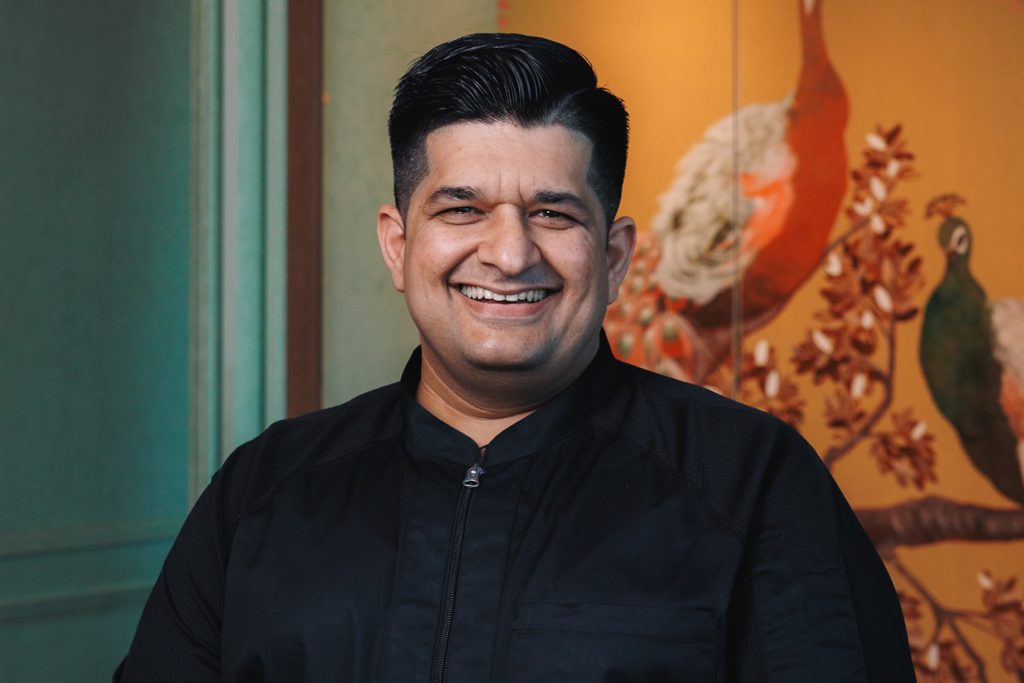
Making the leap from Hong Kong to Dubai was unexpected but not unfitting for the award-winning chef and his ambitions. In conversation with Robb Report Hong Kong, Tuli divulges the decision was “catalysed by a landmark partnership with Jumeirah, a brand whose global reputation made the opportunity too significant to ignore.” On top of a dynamic economy, favourable business climate, and maturing culinary landscape, Tuli cites the city’s “appetite for bold, refined flavours and premium dining experiences [as] the ideal stage for our cuisine—which is modern in its ingredients and technique yet rooted in tradition. While our roots in Hong Kong are deep and cherished, we are thrilled to embrace Dubai’s innovative spirit and become part of its next wave of culinary growth.”
Despite its provenance, The Bombay Club is no Leela 2.0, no simple transplant to a different location. How does the new stand apart from the old? Tuli remarks upon it in his usual eloquent and open-hearted fashion as “a question that goes straight to the heart of why I do what I do; the difference is both philosophical and deeply personal. Leela is a culinary tribute to ‘Greater India’—a concept that lives on in our shared foodways. It’s inspired by my grandmother, who was from what is now Pakistan. She would often tell me stories of how things used to be, lamenting that while geopolitical lines had drawn them apart, the people and their traditions remained so similar. She always dreamed of revisiting that unified cultural landscape, a wish I could never fulfil for her.”
With Leela, Tuli shares the food of a region, ranging from parts of Afghanistan and Pakistan to Nepal and Bangladesh, that was profoundly connected for centuries, as a way of honouring lost geography—“the food at Leela sings the songs of those older, golden times. It’s about universal appeal, yes, but more importantly, it’s about cultural memory and connection.” In contrast, The Bombay Club is “a precise historical excavation,” he explains. “It zooms in on one specific coastline—Western India—and tells the story of its maritime trade with Portugal, Arabia, and France. It’s refined, layered, and speaks to a different kind of journey. In short: Leela is about reconnecting a cultural map through food, while The Bombay Club is about exploring a single, opulent port on that map.”
Mumbai is that spot on the map, and The Bombay Club is the stage on which a sensory dining experience—one that resonates with the essence of the city’s maritime identity—unfolds. Recalling the British Raj era and gymkhana culture of the time, The Bombay Club translates this period into polished hospitality, a glamorous environment, and a menu of Indian delicacies created for sharing.
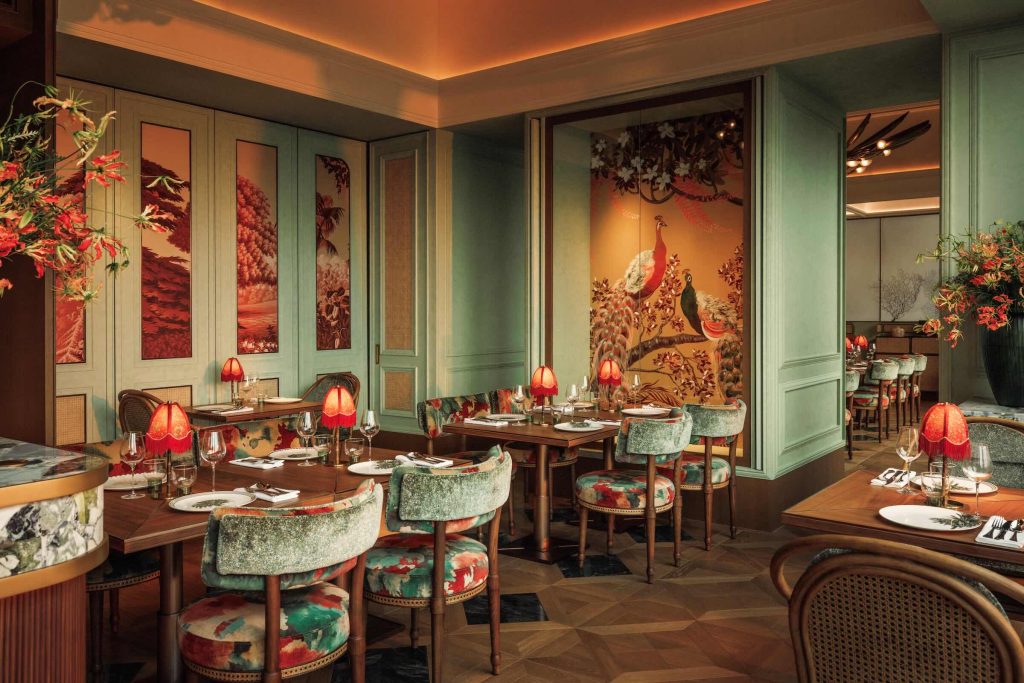
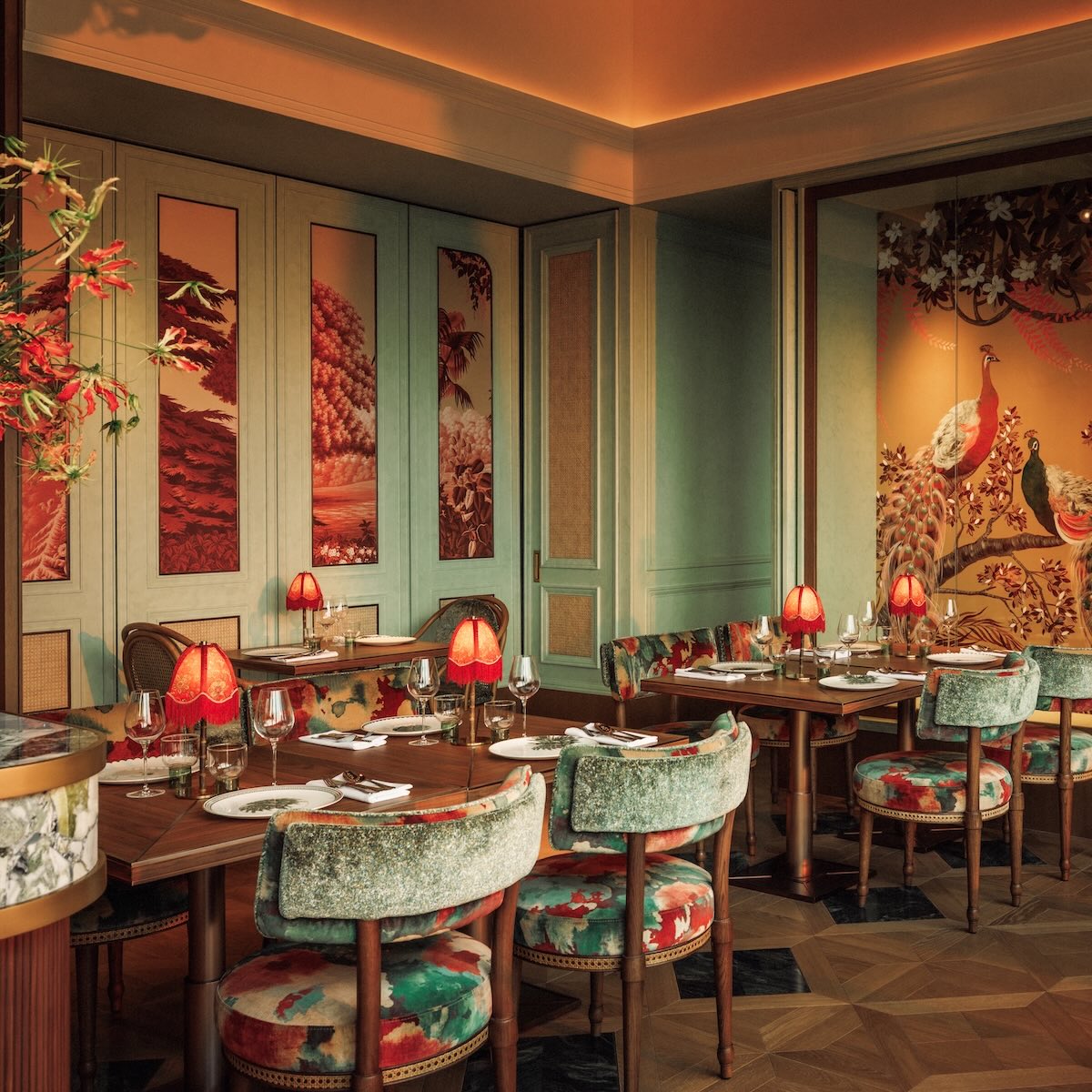
It all starts with the space. Global interior design studio AvroKO, whose acclaimed work can be seen at such restaurants and bars as BKK Social Club in Bangkok, Nuri Steakhouse in Dallas, Momotaro in Chicago, and Lex Yard in New York, was tapped to infuse this dining room at Jumeirah Marsa Al Arab with a “philosophy [that] sees creation as a joyful, cosmic dance, where elegance and ease coexist,” Tuli shares, noting that “the space is designed to feel like the cherished home of a well-travelled rajah, a place where heirlooms tell stories and every object has meaning. It’s not old; it’s timeless. It’s not new; it’s enduring.” Pervasive across the restaurant is the peacock feather motif, which Tuli clarifies is not used as “a mere decorative element, but as the visual heartbeat of the restaurant,” in that the peacock feather “symbolises the divine play that connects our name to our philosophy—where royalty meets grace, and beauty is intertwined with good fortune.”
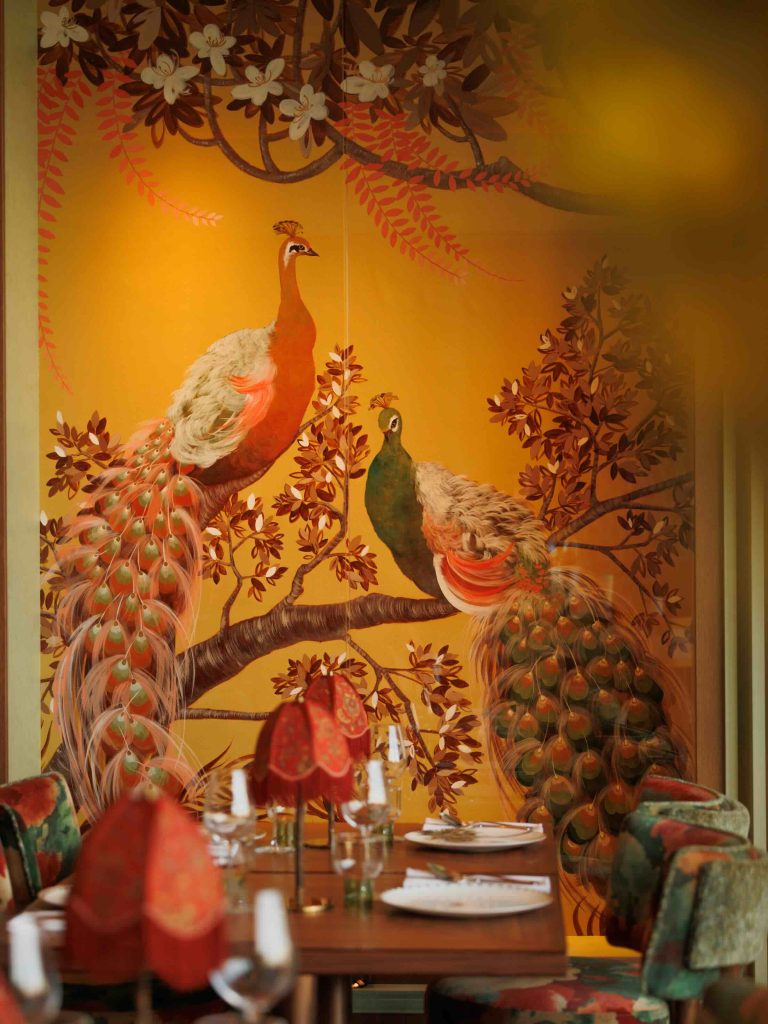
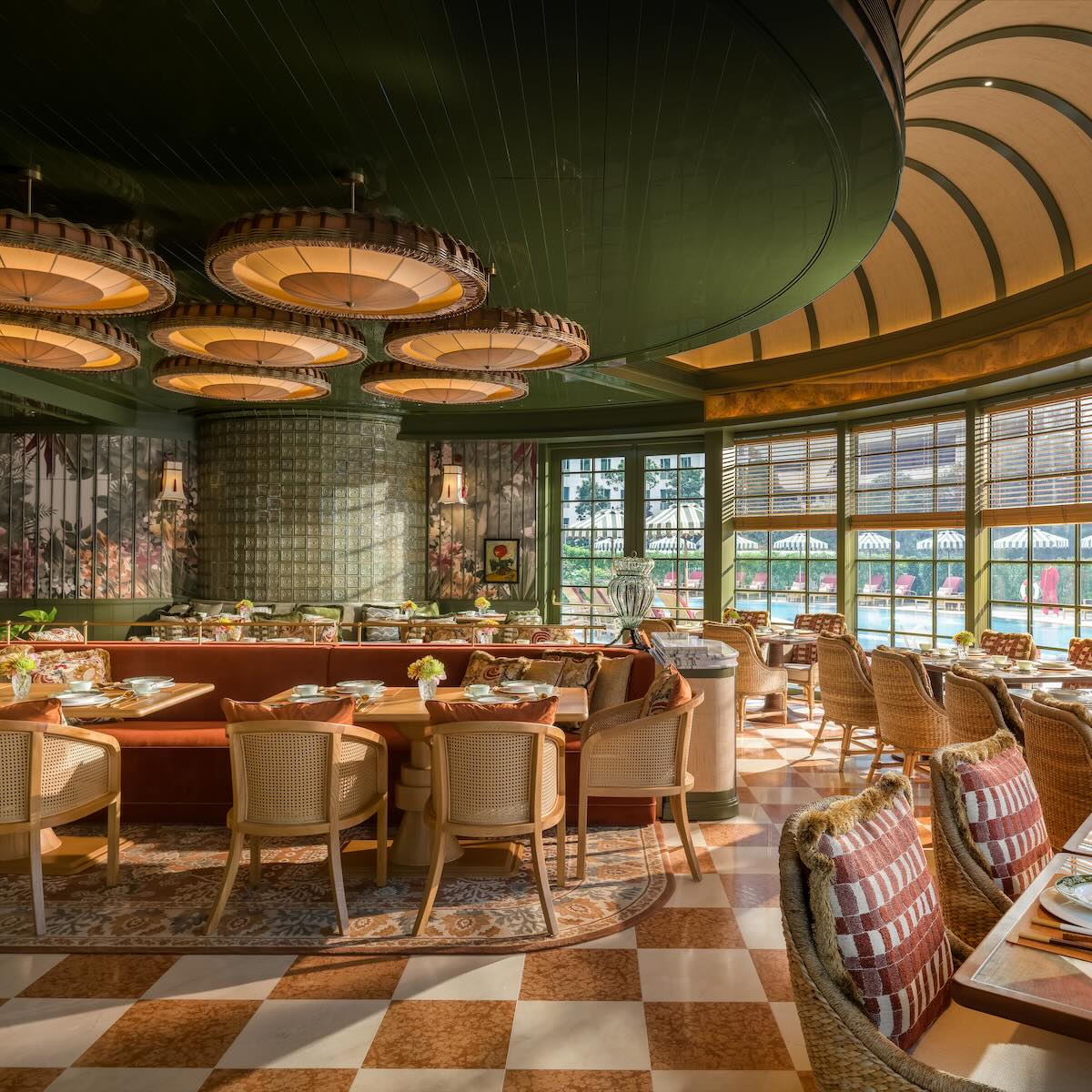
Within the context of the Jumeirah Marsa Al Arab hotel, the restaurant serves more than one function as part of the greater dining ecosystem. At night, it remains The Bombay Club. During the day, it becomes part of The Fore, an expansive collective comprising four eateries—they seamlessly transform from standalone establishments into a united front to serve breakfast and brunch on Saturdays, spanning numerous cuisines. Doors are thrown wide open, partition walls are moved back, and the connected spaces are enhanced with bright lighting and blissful music. As the sun goes down, the ambience shifts, and The Bombay Club comes alive with soulful Indian melodies.
In daylight, soft green tones, exquisite fabrics, and elaborate textures conjure the feel and charm of a grand British Raj-era mansion. As night falls, the atmosphere transforms: a chandelier inspired by peacock feathers descends, bathing the restaurant in a warm, intimate glow, transitioning the space into an environment of luxurious enchantment. “We want our guests to feel the charm and elegance of a bygone era of the gymkhana hospitality, without any of the stiffness,” adds Tuli, describing his vision of cultivating an “evaluated-casual” environment. “It is elegant but not intimidating.”
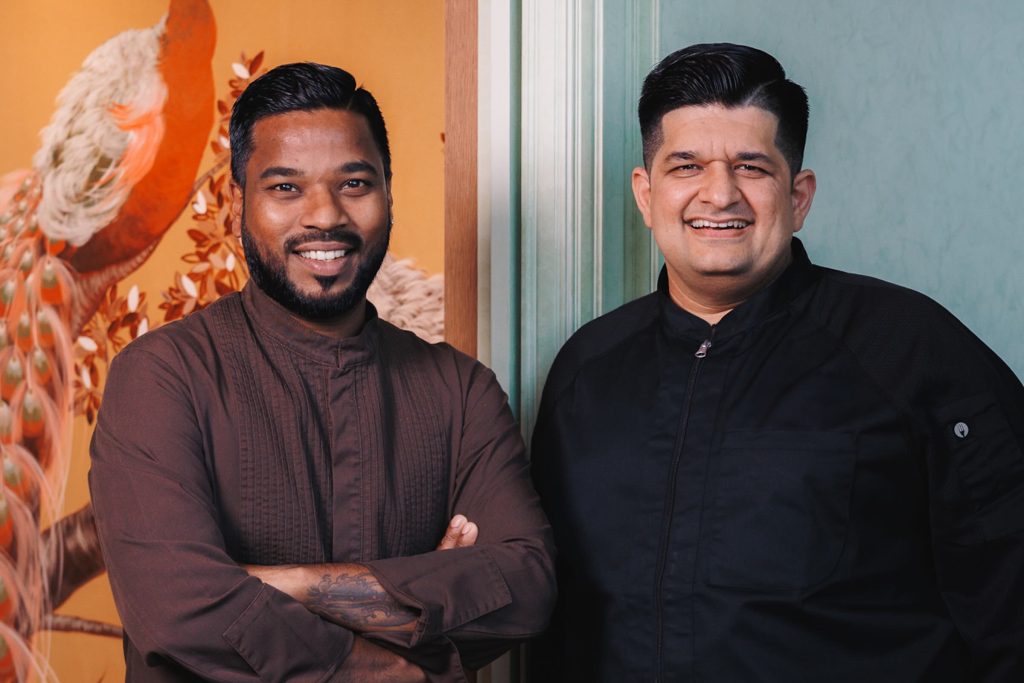
Inside this realm of comfort and beauty, the experts come to play. Tuli cannot be in all places at once, so this is where Kumaran Balaji steps in as the resident head chef of The Bombay Club. Armed with almost two decades of experience in the distinguished kitchens of Oberoi Hotels & Resorts and at Black Sheep Restaurants, Balaji joined Tuli from Hong Kong to bring his understanding of Indian culinary traditions and heritage gastronomy to the groundbreaking Dubai venture.
Developing the menu at The Bombay Club is “always starts with the ingredients and the season. We look at what’s at its peak, both locally here in the UAE and from key regions in India,” explains Tuli. In this collaborative research process, the team must look back to look forward. “We dive into historical texts, regional cookbooks, and old family recipes—not to replicate them directly, but to understand the ‘why’ behind the flavours. We study the spice blends (masalas) of different regions on the west coast, like the rich, spicy, and complex curries of Kerala and Maharashtra.”
Tuli commends Balaji as “a phenomenal talent, and we work incredibly closely. I’ll bring these historical concepts and stories, and he brings his brilliant technical expertise. We discuss, we taste, we debate.” Can a seasonal ingredient like fresh cashew, or a specific mango varietal, be used in a way that feels authentic and innovative? Dialogues on how to interpret dishes with a modern, refined balance ensue between the two chefs. Still, no man is an island, and so the guidance of the seasoned F&B team at Jumeirah Marsa Al Arab, led by Charles Theret and Robert Rispoli, for location that is still somewhat unfamiliar is invaluable. “Being new to Dubai, it is crucial to ground our creativity in the local market’s pulse,” Tuli admits. “We present our concepts and dishes to [the F&B team at Jumeirah Marsa Al Arab] and their feedback is invaluable—they help us ensure the direction we’re headed in resonates, that the stories we want to tell are being heard and experienced by our guests.”
From their domes to the dining table, what Tuli and Balaji cook up at The Bombay Club is “an homage to Indian kitchens from the West Coast not through literal reproduction, but by embracing their core philosophy.” In these “laboratories of innovation,” as Tuli succinctly puts it, stories of prestige and place were written. “A dish like our guinea fowl samosa, for instance, takes a regal approach to a humble snack, using a premium ingredient and a refined technique fit for a king.”
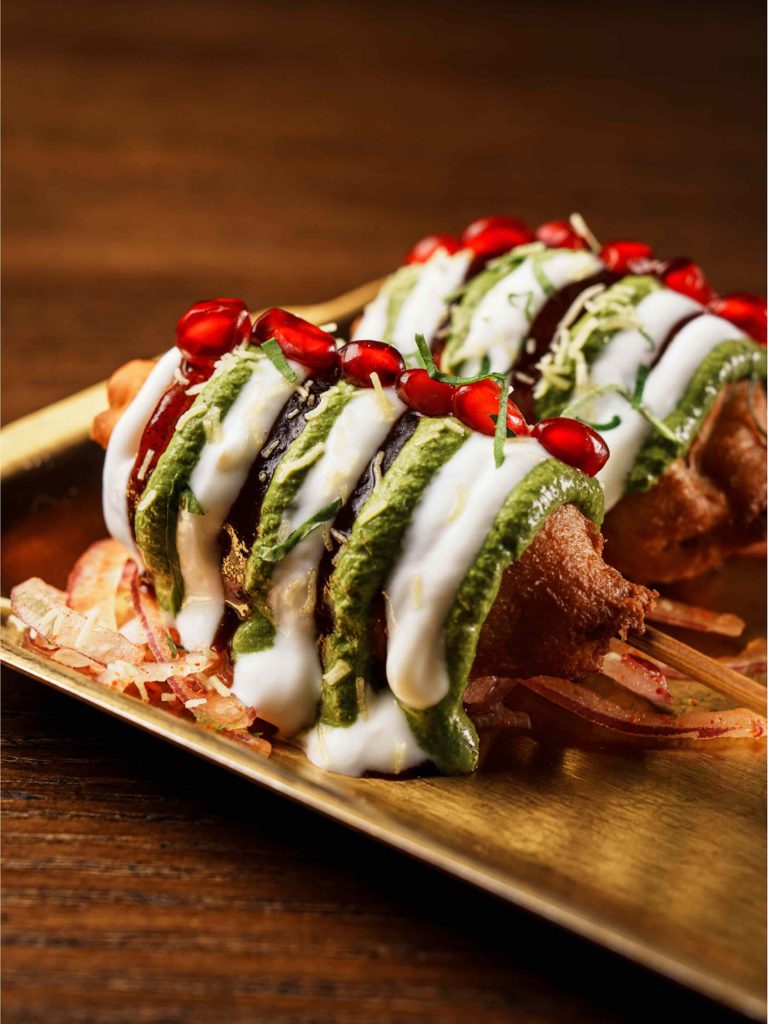
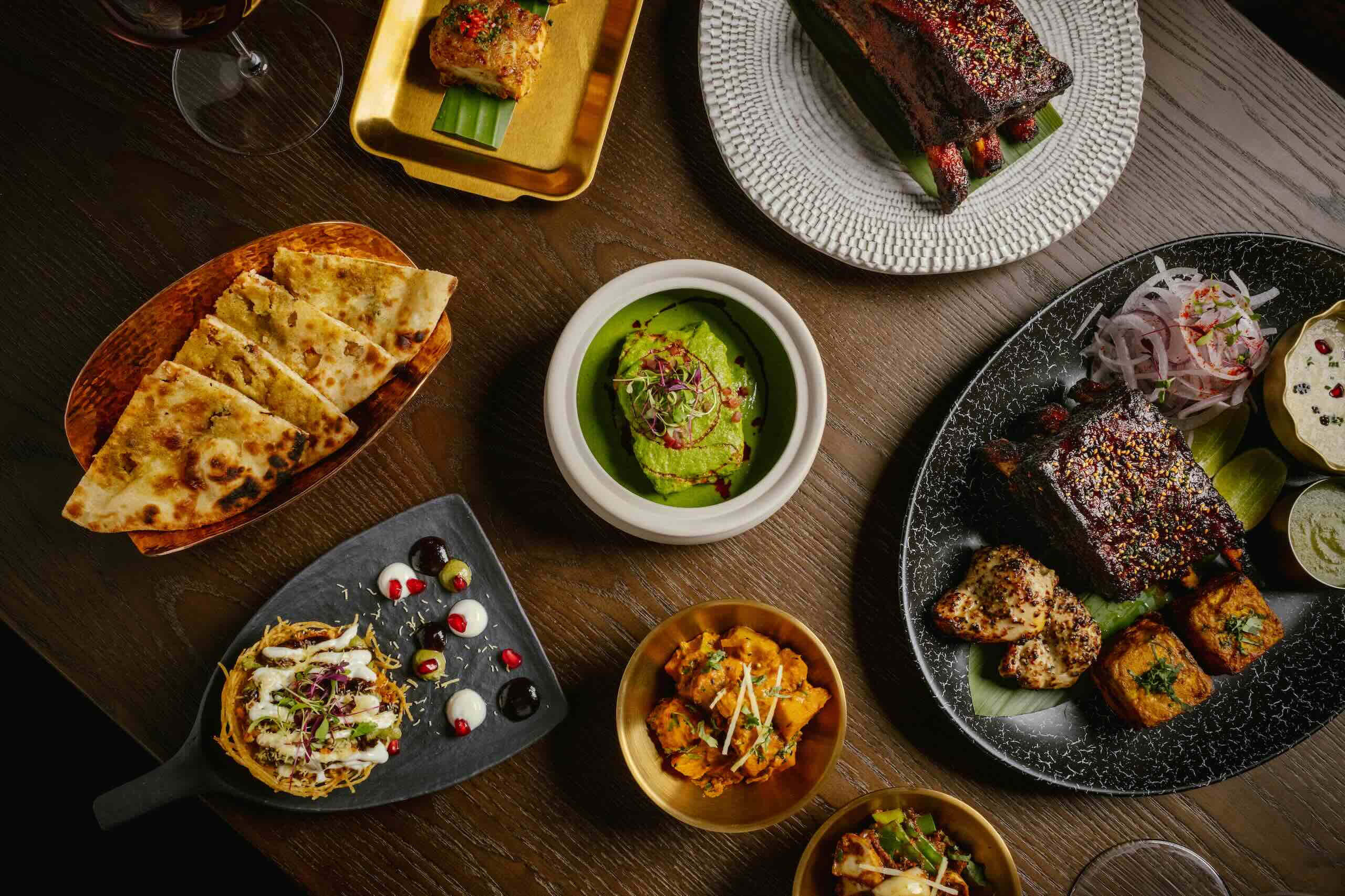
Presented in a tasteful cone, perfect for three bites, the guinea fowl samosa is the surprising star of the show. “We take a beloved, classic format—the samosa—and reimagine it with refinement and a modern sensibility,” he explains. Baked instead of fried, the crisp, golden pastry honours the original texture of the dish but achieves a lighter and more elegant result. Meanwhile, the filling adds an even richer narrative. “We use succulent guinea fowl mince, which is leaner and has a more nuanced, gamey flavour compared to traditional meats. We spice it with a carefully balanced blend that whispers of the history of India’s West Coast, without overpowering the delicate fowl.” Humble and unpretentious, Tuli considers the guinea fowl samosa his personal favourite on the menu—it epitomises what The Bombay Club stands for. “It’s more than a snack; it’s a statement. It represents our entire approach: respecting tradition while having the confidence to evolve. It’s a familiar shape with a completely surprising and sophisticated soul,” the chef affirms.
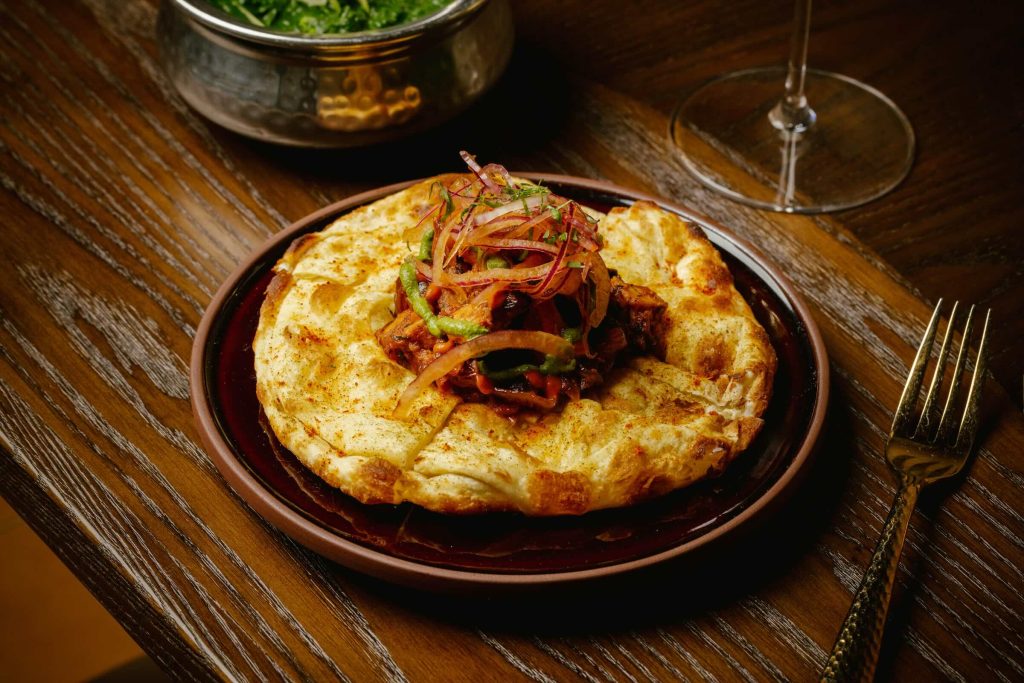
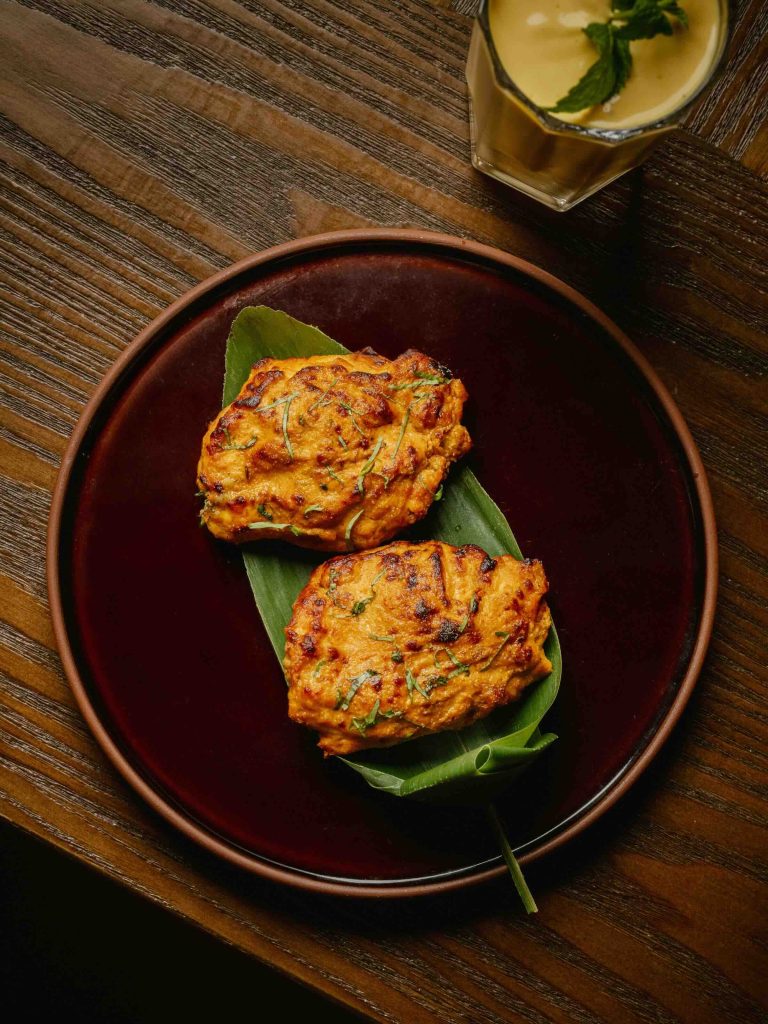
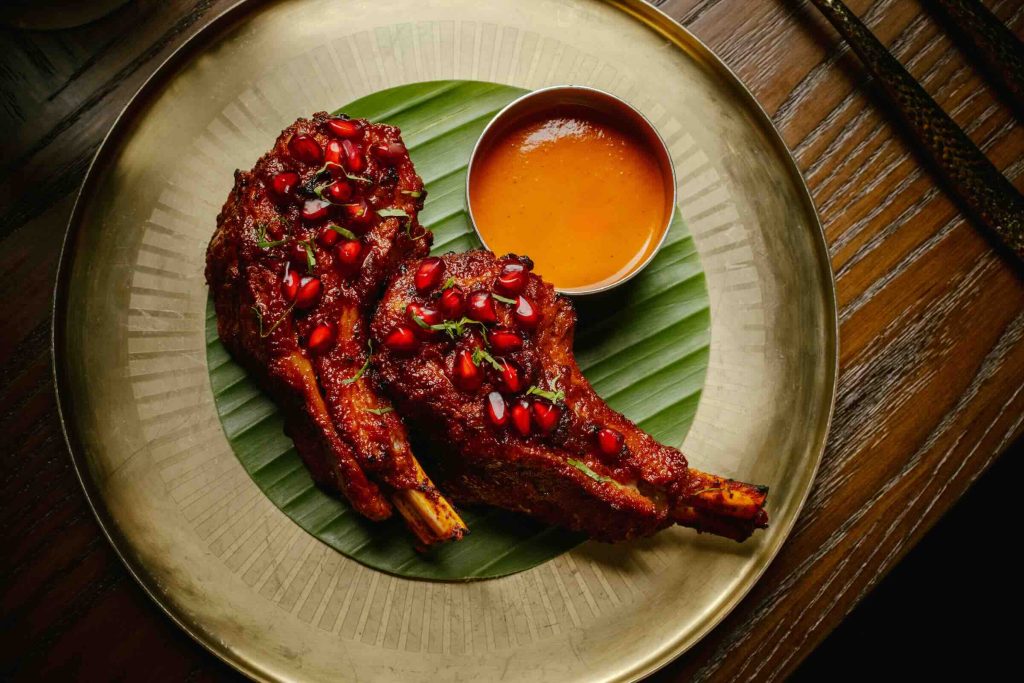
Elsewhere on the menu, the dishes represent a mesmerising expedition through Western India’s coastline—stories are told through flavours, and parts unknown are explored through traditional dishes redesigned for modern palates. Craftsmanship and character find harmonious resonance in the tandoori lobster, seasoned with mustard, coriander, and Kashmiri chilli. Balaji deems it “a truly memorable dining experience” centred around generosity and the joy of sharing.
Another creative interpretation that embodies the spirit of The Bombay Club is the kebab caju, a Portuguese-inspired deep-fried cashew-nut kebab with smoked chilli chutney and fresh mango chutney. Balaji rates it highly as a dish that diners cannot find elsewhere, as the key ingredient recounts a snippet of the past, standing as a “testament of our innovation and evolution,” he asserts. “Caju literally means ‘cashew nuts’ in Portuguese, and the journey of cashews in Goa began nearly 450 years ago when Portuguese missionaries brought in the cashew plant from Brazil to prevent soil erosion in the state. In due course, the local population was acquainted with the edible property of this marvellous fruit. Eventually, the cashew plants grew rapidly along the western coast of India, attracting various local businesses.” At The Bombay Club, “this delicate and deep-fried kebab with nutty flavour of cashew nuts, spiciness of smoked chilli chutney and sweet freshness of mango chutney makes a wonderful balance and a great vegetarian option,” he shares.
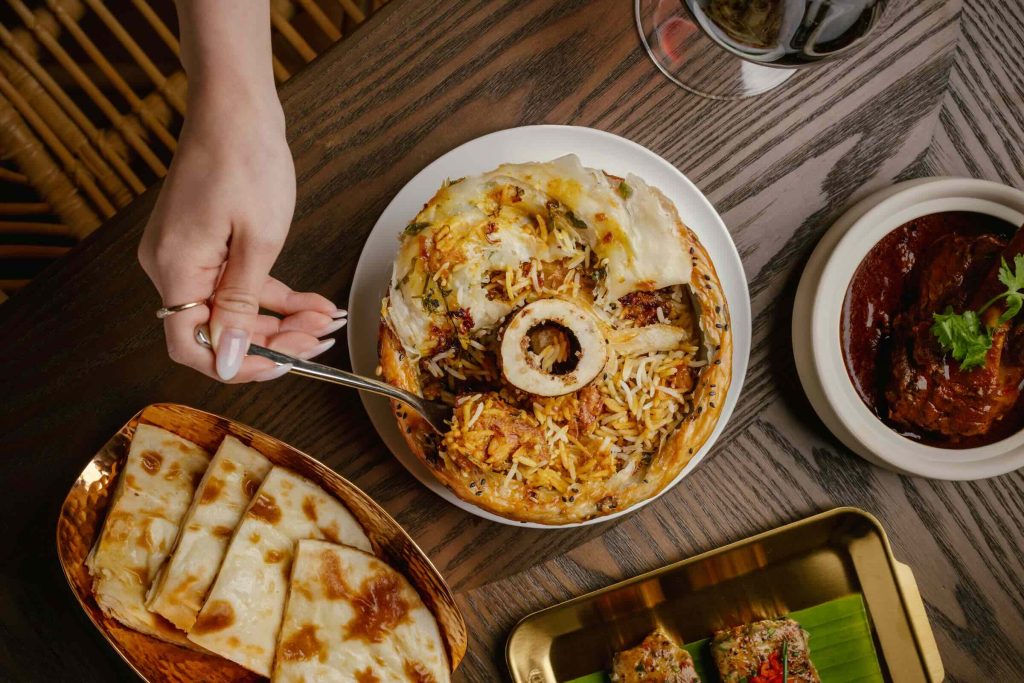
From the tandoori Wagyu beef cheek with tantalising notes of mint, cinnamon, and ginger and moreish Malwani prawn curry infused with Byadagi chilli, coconut, and garlic, to the must-order Bohri lamb biryani with aged basmati rice, fragrant saffron, and rose water, the homemade chestnut paneer tikka with fenugreek and turmeric, and the appetite-whetting raj kachori with crispy lentils and a sweet and tangy chutney, each item at The Bombay Club captures the essence of elevated traditional cuisine and demonstrates an interplay of old and new, rooted in Western India’s culinary customs.
“Ultimately, it’s this team effort—my historical and conceptual direction, Chef Kumaran’s culinary execution, and the strategic guidance of the [Jumeirah] Marsa Al Arab team—that creates a menu which is both respectful of the past and thrillingly modern,” Tuli sums up.
“While the dynamic food scene in Dubai has seen it all, we’re not here to reinvent the wheel—we’re here to refine the experience,” Balaji emphasises, reflecting on how the restaurant has been received. “What sets us apart is our unwavering commitment to heartfelt hospitality and honest, soulful food served with pride and character. It’s not about being new—it’s about being honest and meaningful.”
The Bombay Club by Chef Manav Tuli
G/F, Jumeirah Marsa Al Arab, Umm Suqeim 3, Jumeirah Road, Dubai, United Arab Emirates
Tel: (+971) 800 323 232
All images courtesy of The Bombay Club.