


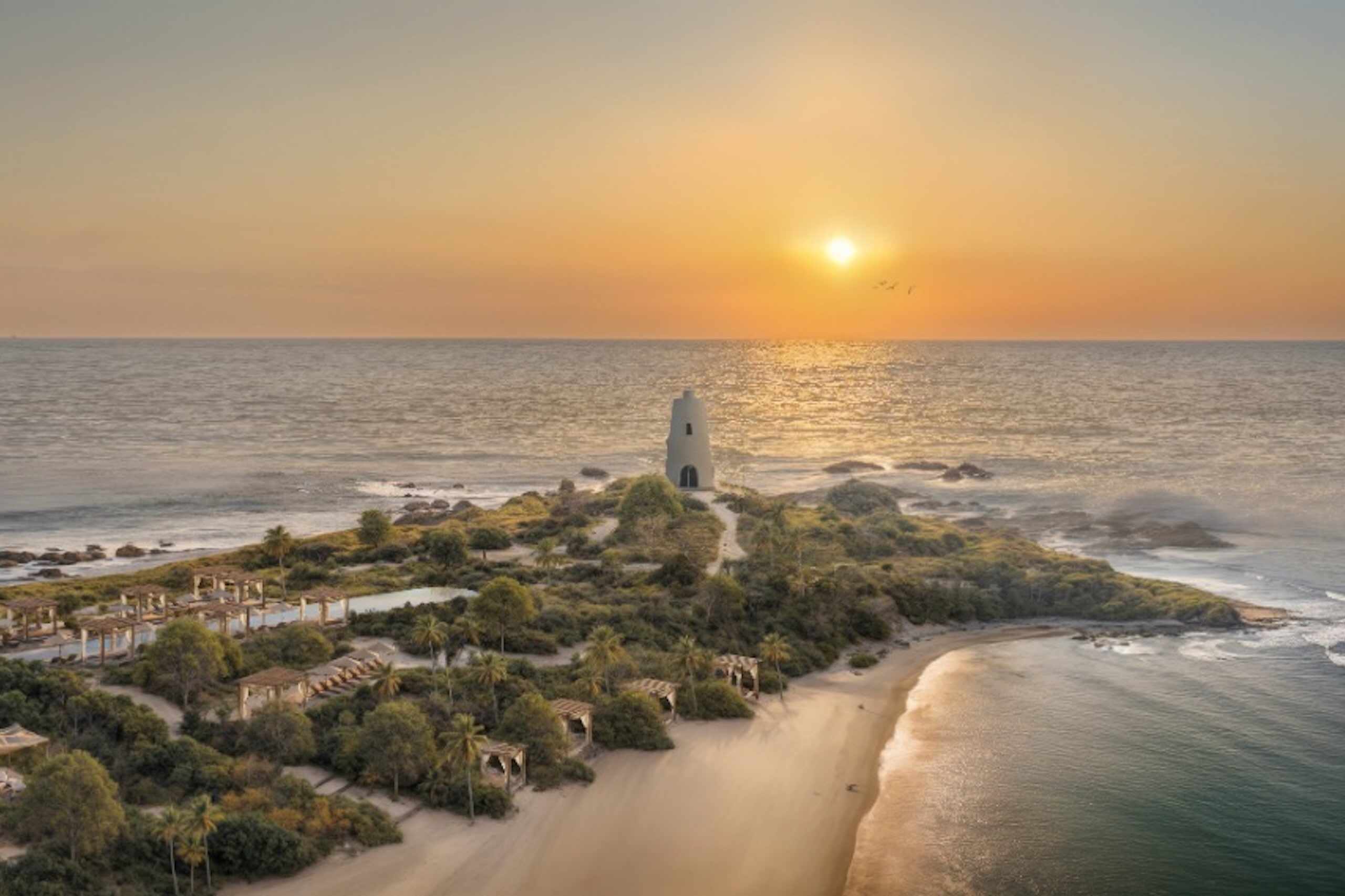
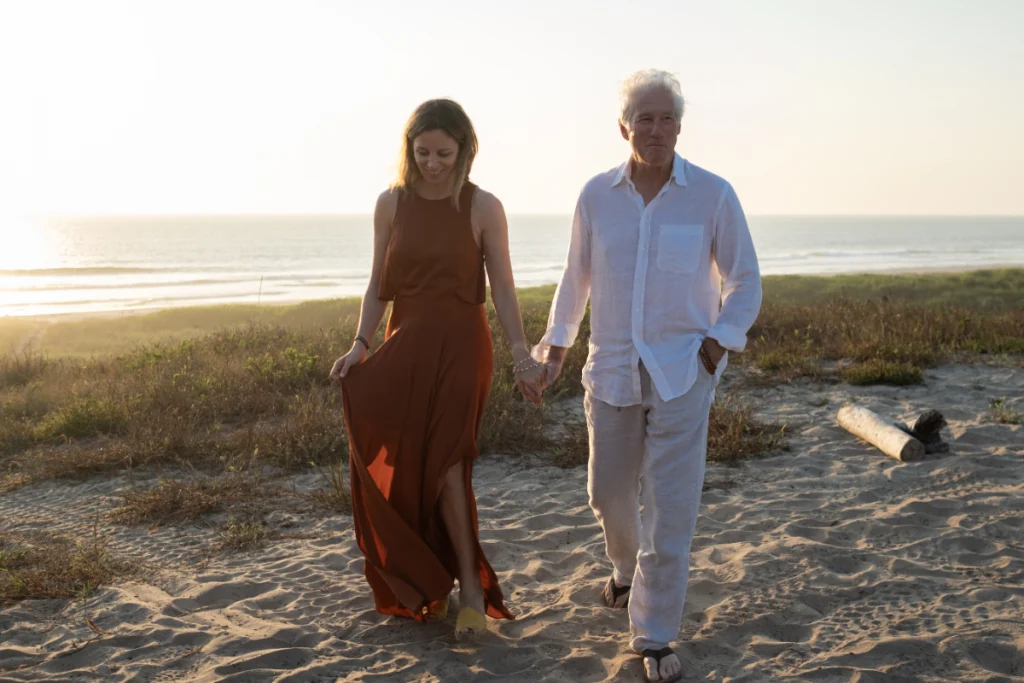
Richard Gere never planned to get involved in a luxury development, much less one with his name attached to it. “I have no interest in things like this whatsoever that are connected to some kind of commercial enterprise,” he says plainly. And yet he has become a vocal advocate and future resident of Xala, a 3,000-acre regenerative resort community on Mexico’s Pacific Coast anchored by the country’s first Six Senses Hotel and Residences.
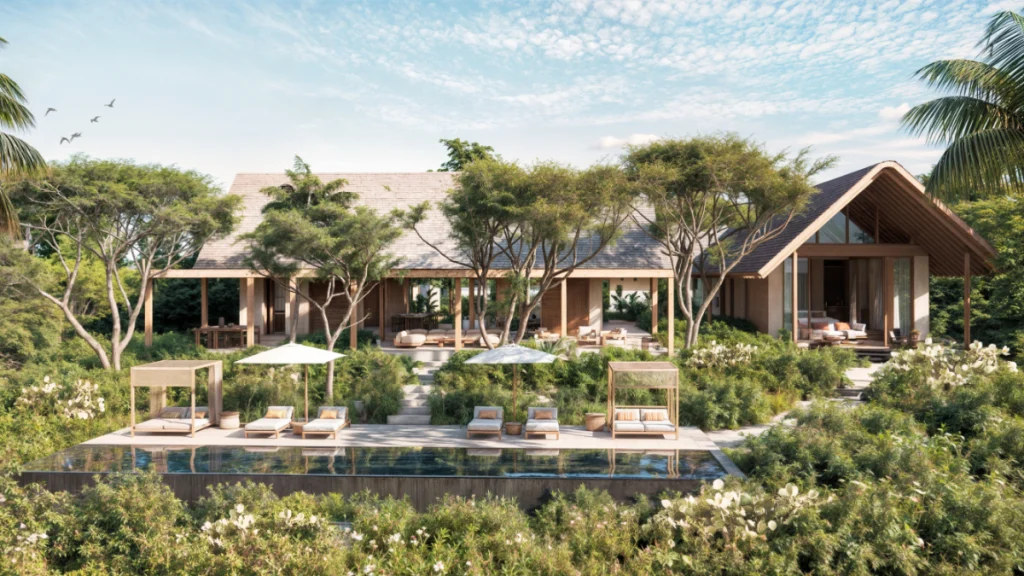
What persuaded the 76-year-old actor was not just the idea of a retreat in Mexico but the rare alignment of philosophy, place, and partner. At the heart of Xala is the Six Senses–branded collection of 36 one-story homes designed to disappear into the landscape rather than dominate it. They sit within one of the lowest-density luxury developments ever conceived in Mexico, and, for Gere, the residences represent something far more ambitious than ownership. They are a test case for how high-end hospitality and conservation might coexist without compromise.
Xala Original Content/Bamba Estudio
The idea did not originate in Mexico. Years earlier, Gere and his wife, Alejandra Silva, were staying on a remote beach in the Dominican Republic when a developer approached him, first for an autograph and then for his involvement in a project. Gere initially declined, but the question lingered. “He said, ‘If there was a situation you could imagine being involved in, what would it look like?’” Gere recalls.
The couple began sketching a hypothetical blueprint grounded in unspoiled land, deep integration with local communities, environmentally respectful architecture, and a model that could be replicated elsewhere. “You could imagine a utopian situation of a virgin beach, virgin land, and happy people,” Gere says. “A marriage of protecting the land and developing in such a way that the new owners would be benevolent and want to be part of the local community.” For two years, they researched everything from energy conservation to architectural models, speaking with experts around the world. Ultimately, that partnership did not align, and they walked away.
Combeau-Murtagh Architects
Chance intervened again, this time at 35,000 feet. Silva found herself seated beside old acquaintances from Madrid, Mexican developers whose children attended the same school as hers. They were working on a project in Mexico. As Silva listened, the parallels were uncanny. “It sounded like exactly what we had already worked on for two years,” Gere says. “It was like they read our mission statement.”
Silva travelled to see the land first. Gere resisted, at least at first. When she returned with videos, the terrain felt instantly familiar. “This is like Africa 200 years ago, untouched,” he remembers thinking. Then recognition set in. “I said, look, this looks familiar to me. Where is this? I was there like 30, 35 years ago.”
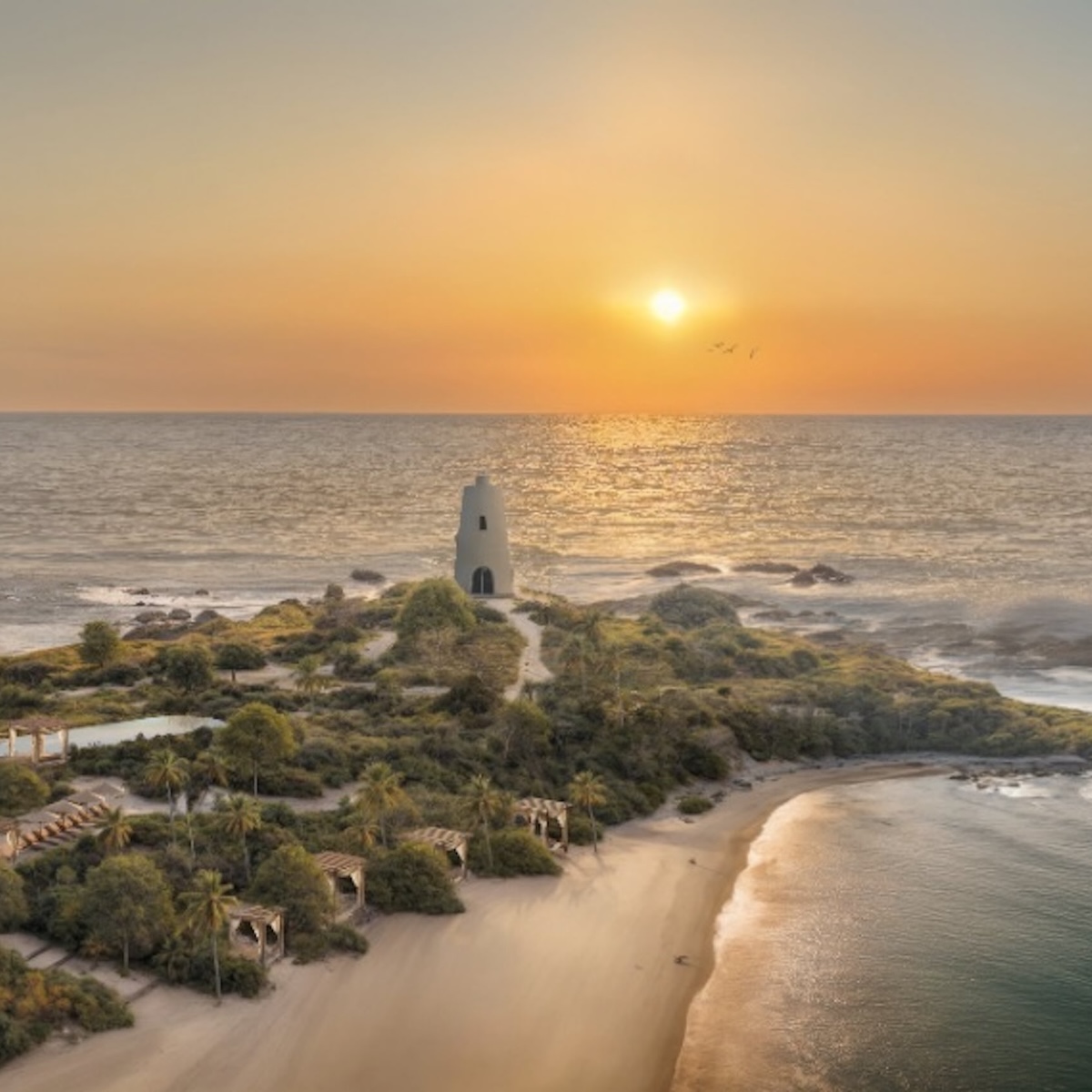
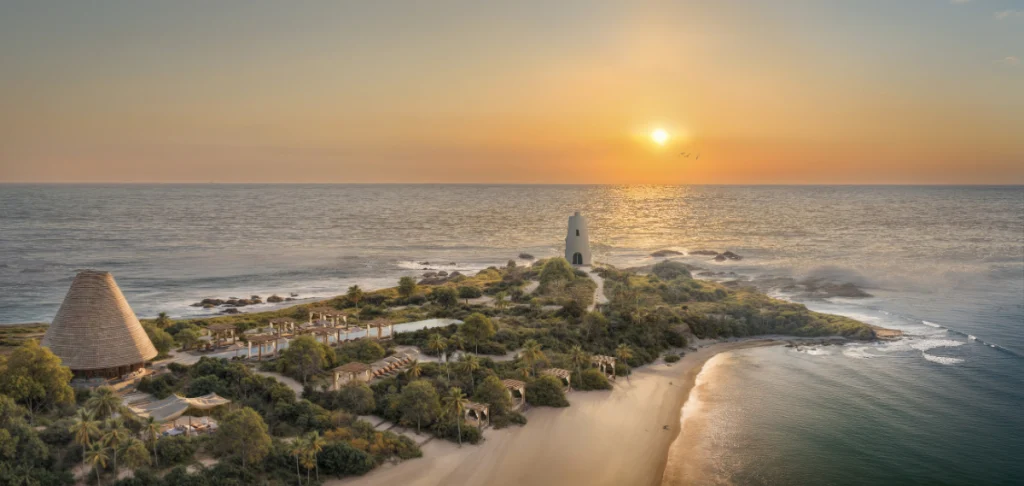
The land was Xala, a largely undeveloped stretch of Pacific coastline in Jalisco’s Costalegre region, with five miles of white-sand beach backed by UNESCO-protected estuaries serving as nesting grounds for endangered sea turtles. The couple later visited together and met Xala’s founders, including brothers Juan and Jerónimo Bremer and partner Ricardo Santa Cruz. Everything clicked.
“It seemed like genuinely, they were on the same wavelength,” Gere says. “The possibilities of really making something that was sustainable, respectful to the local people, respectful to nature. Preservation and integration and inclusion were part of their mission statement.”
Combeau-Murtagh Architects
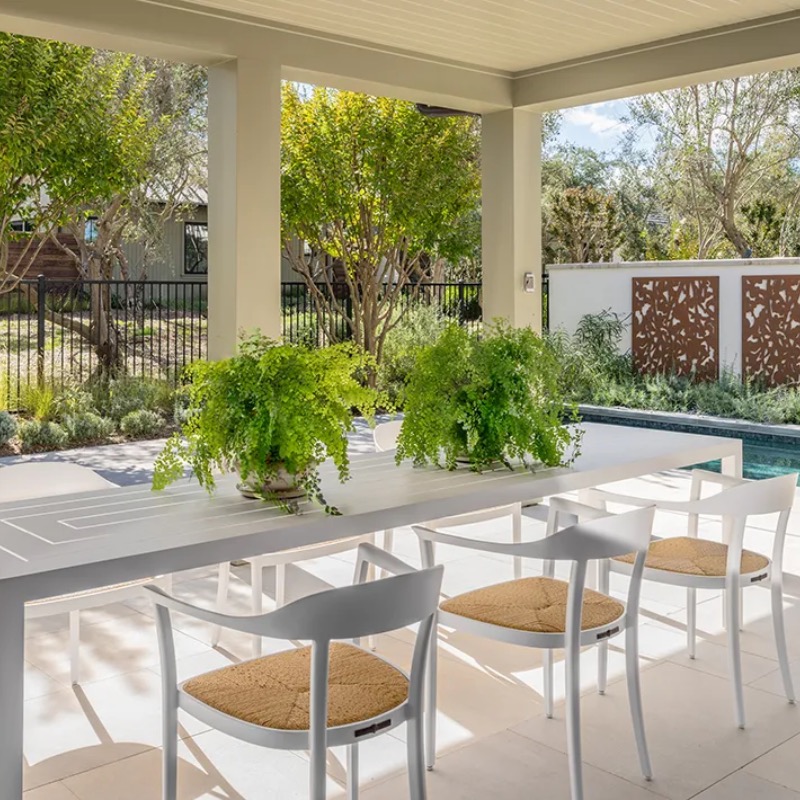
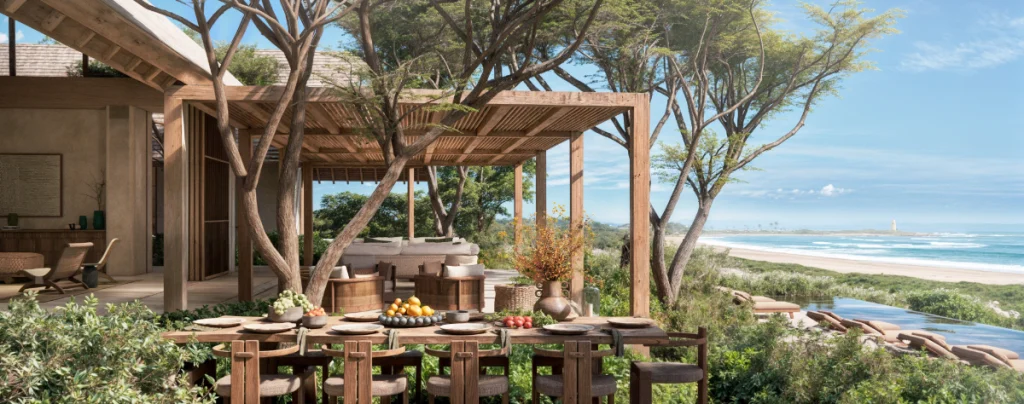
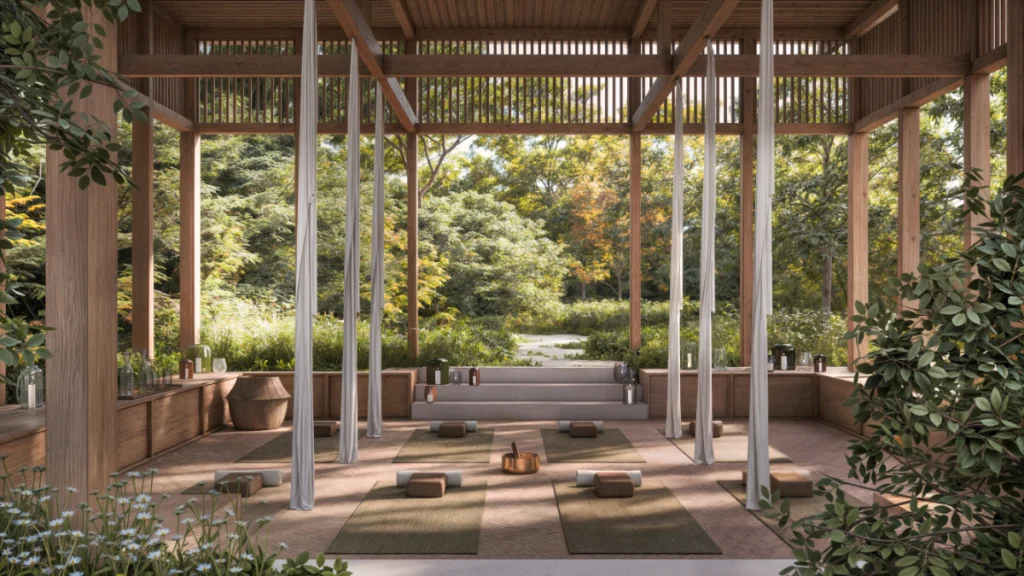
Less than 20 percent of the 3,000-acre site will ever be developed, with the remainder preserved as protected natural land, reforestation zones, and agricultural space. The Six Senses homes are deliberately modest in scale and expression, built as single-story structures using natural materials and passive design strategies.
Gere describes the aesthetic as “agrarian international… as simple as it can possibly be, beautifully done, timeless, with space and nature and no concrete.” The goal is architecture that dissolves into the landscape rather than boldly announces itself, a philosophy that closely mirrors Six Senses’ broader approach to barefoot luxury and wellness-driven design.
Indeed, the partnership with the hospitality brand was essential. “Six Senses is a really good partner,” Gere says. “It was a very low-key, aesthetically beautiful, natural experience, and so far, Six Senses has proven their word in being committed to those things.”
Combeau-Murtagh Architects
The development team behind Xala, Santa Cruz and the Bremer brothers, previously partnered on Mandarina in Riviera Nayarit, home to the One&Only Mandarina, which was named the number one hotel in North America by The World’s 50 Best Hotels in 2023. That track record helped solidify confidence in Xala’s long-term vision, particularly its emphasis on stewardship over spectacle.
Construction on the Six Senses Hotel and Residences began this year, and early demand has been strong. Of the first 12 Six Senses homes released, priced between US$8 million and US$12 million (approximately HK$62.45 million and HK$93.68), 10 have already sold.
Beyond the 36 branded residences, Xala’s residential offering also includes 77 Rancho Estates, alongside a growing slate of shared amenities, from beach clubs and a surf club to an organic farm, equestrian facilities, and miles of trails woven through the landscape. Co-founder Ricardo Santa Cruz’s Casa Sereno, the first Rancho Estates home to be completed, has already become a gathering place. “Of course, everyone stays with him,” Gere says, laughing.
NQS Creative
Even so, Gere is clear that ownership is not the point. He and Silva plan to become residents themselves and they emphasise that Xala is not meant to function as an isolated enclave. The project’s conservation and community initiatives extend far beyond its borders. “We realised it couldn’t just be our island of 1,000 acres,” he says. “We’re going to try to protect 100 kilometres of this coast from the mountains all the way down to the ocean.”
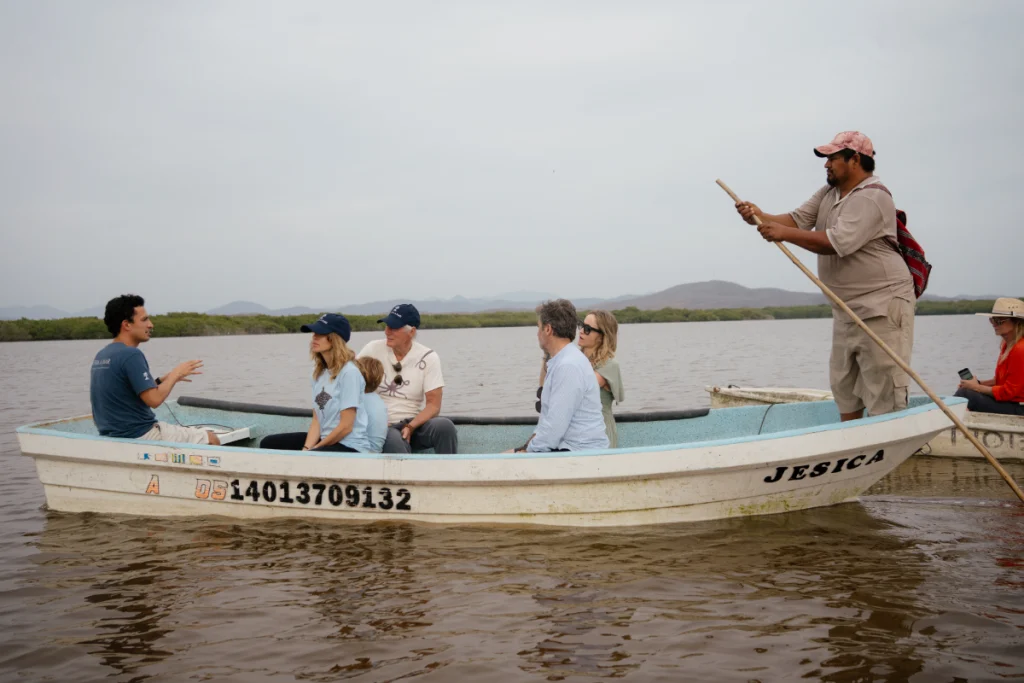
Through the Xala Foundation and Gere’s leadership of Sierra a Mar, those efforts include fisheries protection, estuary restoration, reforestation, clean-water infrastructure for local farming communities, women’s economic programmes, micro-lending initiatives, and support for traditional salt producers. Building trust, Gere notes, requires time. “A lot of listening, a lot of patience and vigilance.”
Xala Original Content/Bamba Estudio
For Six Senses, the partnership with Gere adds credibility and a certain level of notoriety to a project already positioned as one of the most ambitious experiments in regenerative luxury living on the Pacific coast. For Gere, the motivation is simpler and harder to replicate. “This is not a vocation,” he says. “It’s creating a model.”
Gere is confident in the earth-first ethos behind Xala, and he hopes the Six Senses-anchored community will demonstrate that luxury living and a rigorous, long-term stewardship of pristine lands do not have to exist in tension, especially along one the world’s last untouched coastal regions.