


Welcome to Checking In, a review series in which our editors and contributors rate the best luxury hotels based on a rigorous—and occasionally tongue-in-cheek—10-point system: Each question answered “yes” gets one point. Will room service bring you caviar? Does your suite have its own butler? Does the bathroom have a bidet? Find out below.
Describe the hotel in three words: Homely. Eclectic. Sybaritic.
What’s the deal?
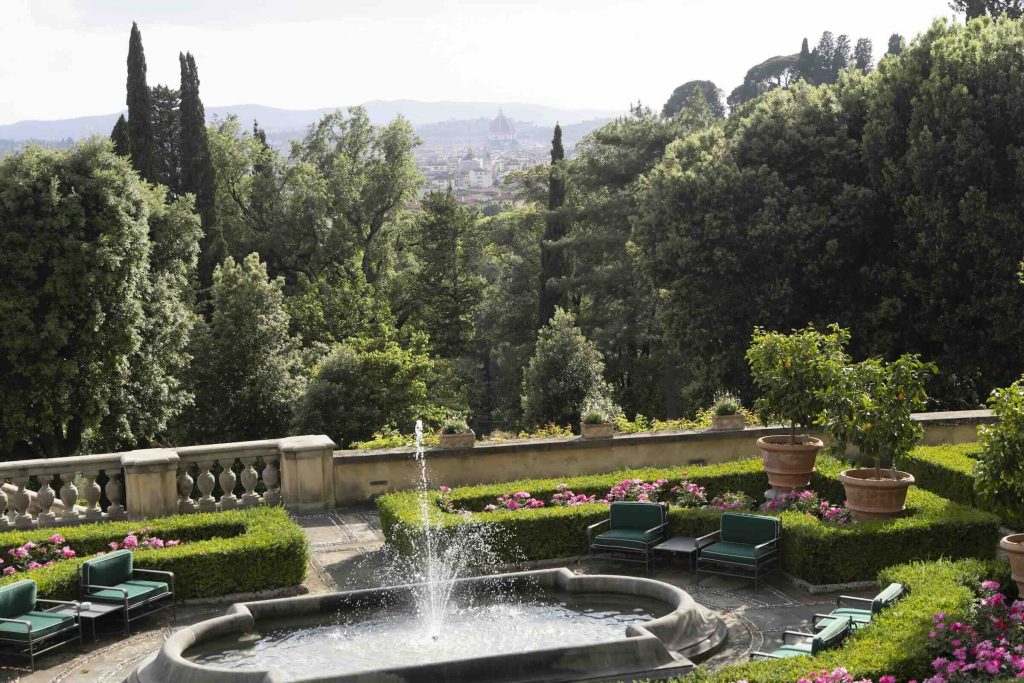
“A five-star gem, set in rural surrounds, overlooking the city skyline…” It’s a phrase that is unlikely to appear in a Hong Kong guidebook any time soon. From the terrace of Il Salviatino, though, the birth of the Renaissance seems to unfurl, carpet-like, in the middle distance, with the iconic Brunelleschi cupola atop the Duomo roughly at eye level.
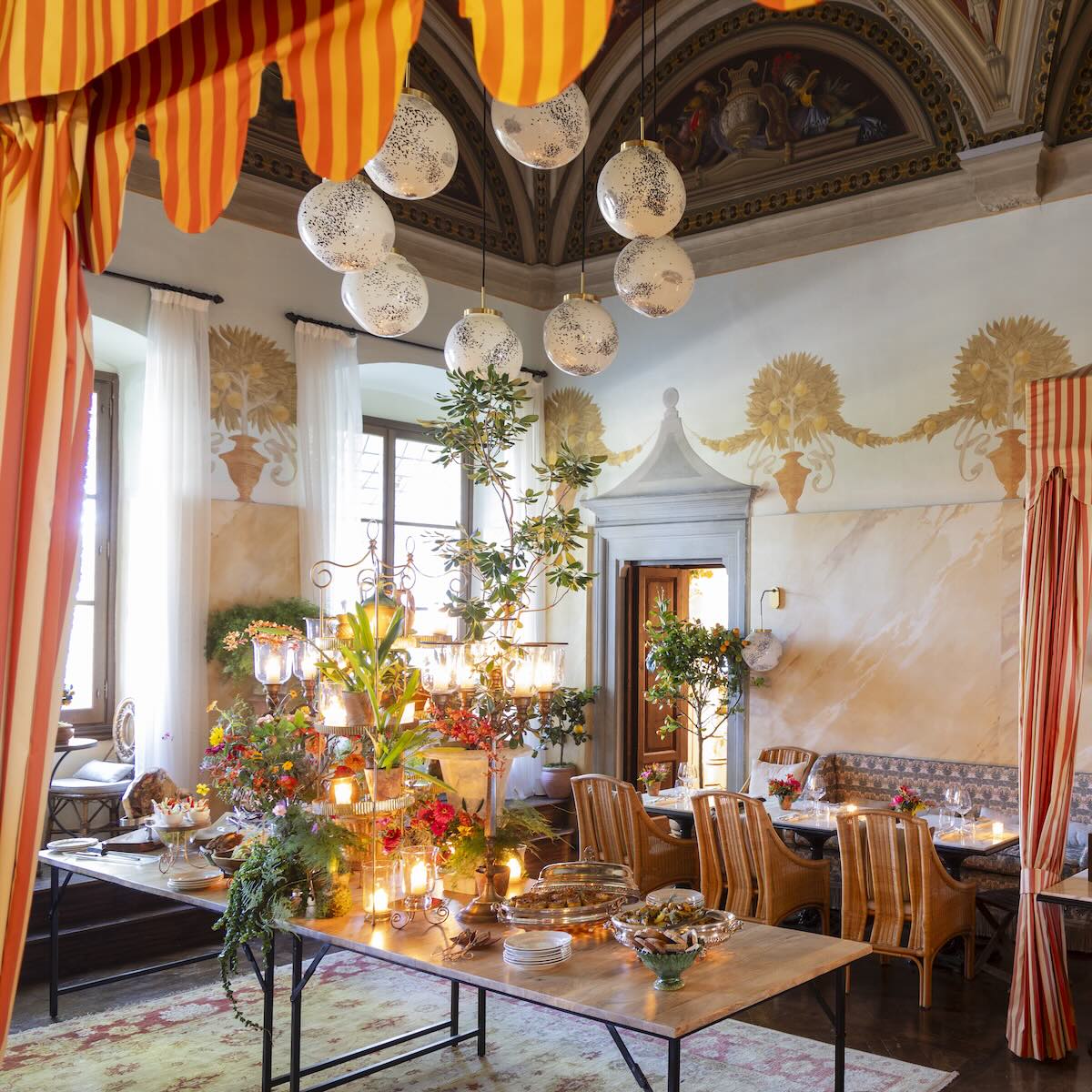
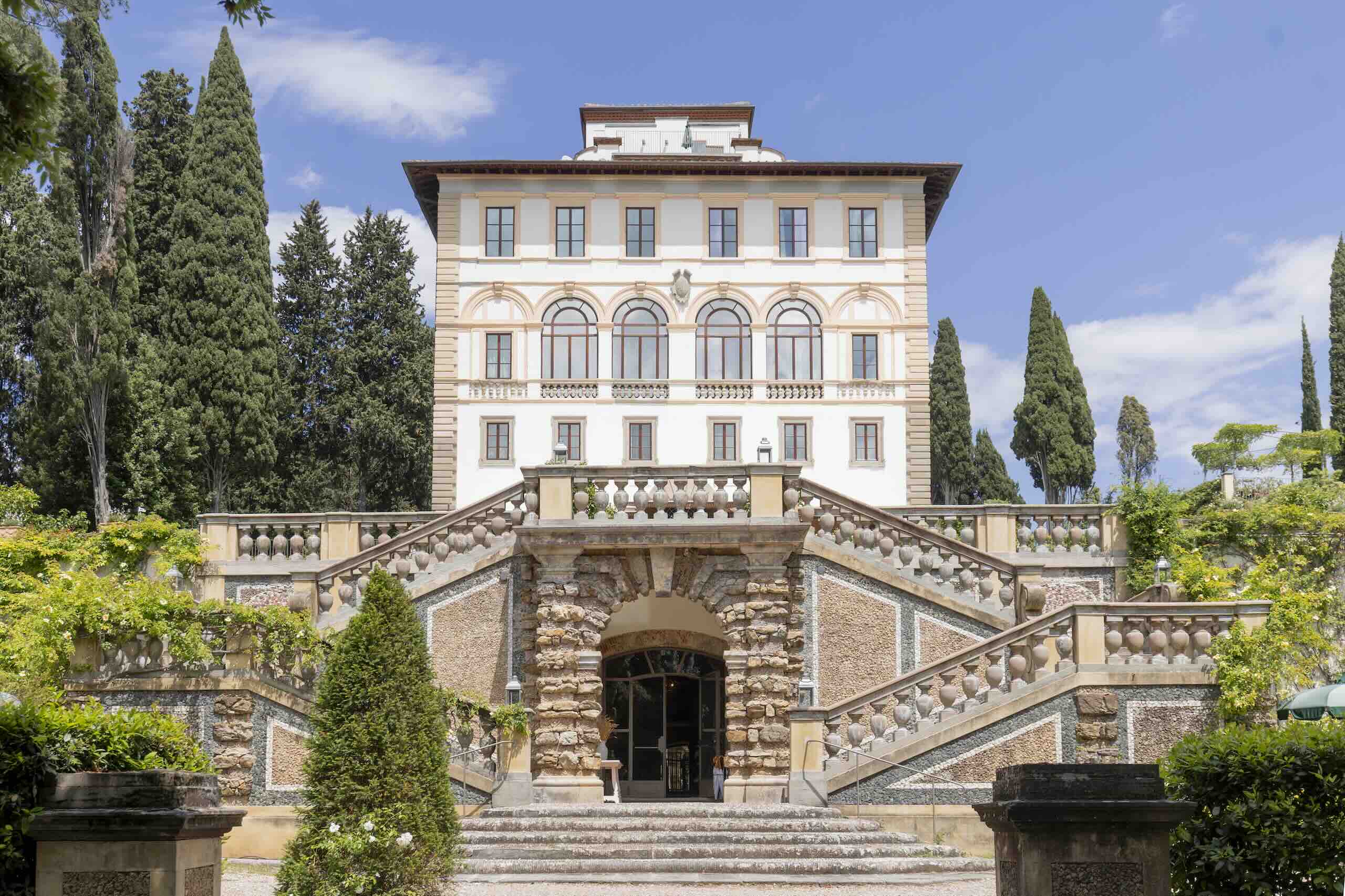
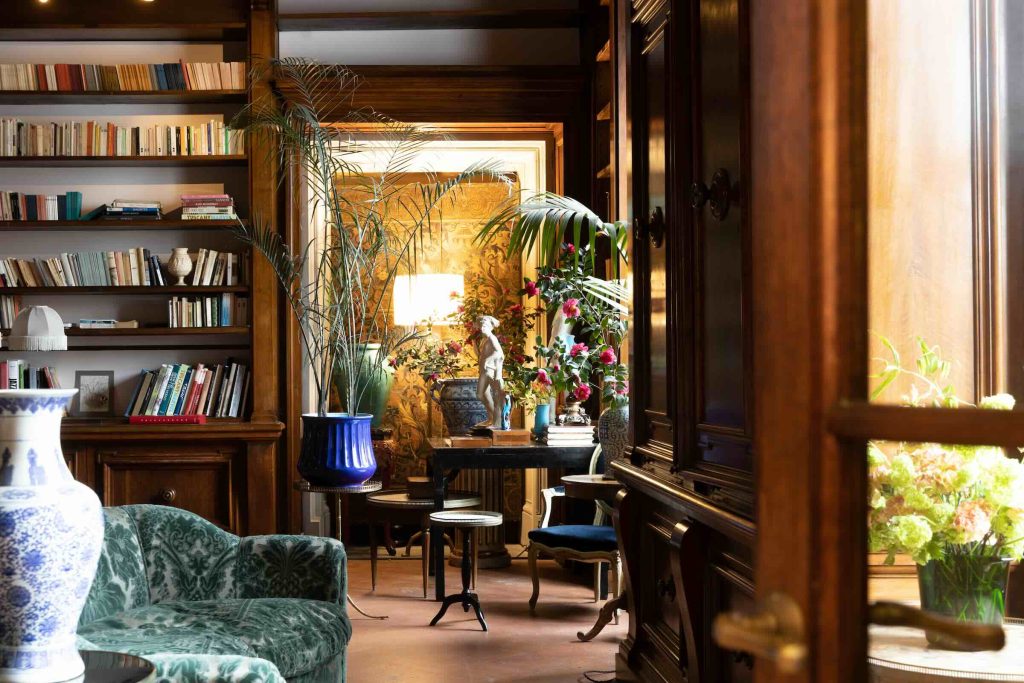
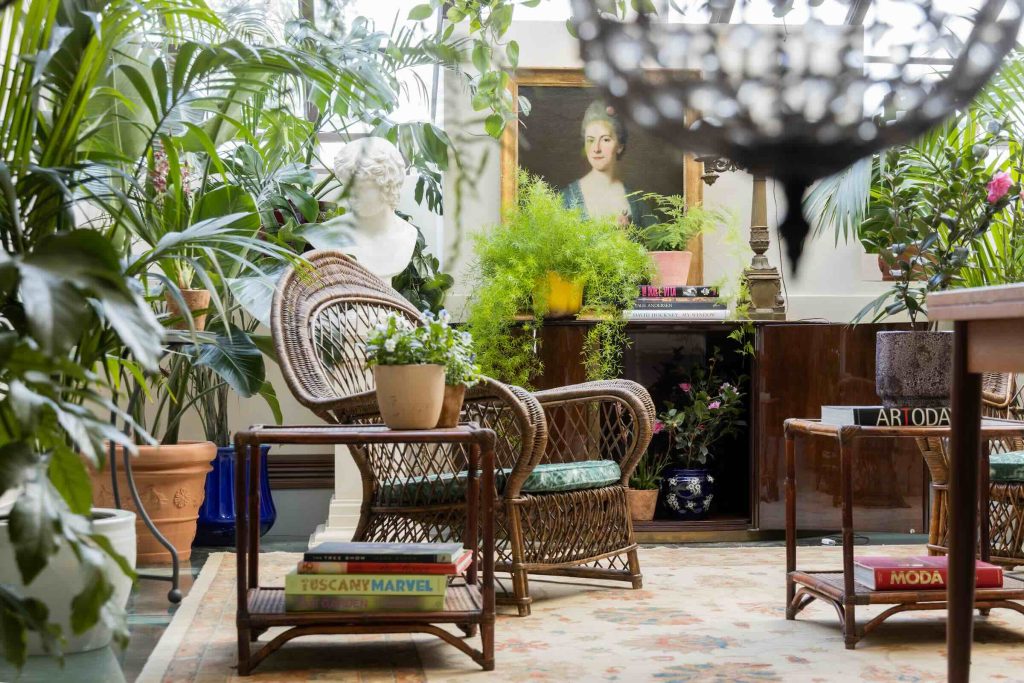
Set within 12 hectares of private parkland, about five kilometres northwest of Florence’s (not-so) dead centre, Il Salviatino—a 15th-century villa built by the family after whom it is named—is a testimony to the tastes, passion, and diligence of its owner, Milanese entrepreneur Alessandra Rovati Vitali. It’s a place where classic, mid-century, and modern furnishing—Gio Ponti chairs, Mario Bellini sofas, pieces acquired at a Ritz Paris auction—are set amongst a profusion of plants, perennials, and flowers, and every hideaway, every nook, cranny, and stretched alcove has its own aesthetic identity: some harmonious, some offering a masterclass in discordant harmony.
Getting from your room to the public spaces, a faintly ecclesiastical scent follows you down the medieval staircases and corridors, the church-like ambience supplemented by the echo of far-off staff exchanges. You find yourself slowing your pace, hands behind your back, as you take in the artworks, 19th-century frescoes, and neo-Gothic vaulted ceilings. Outside, an enchanting, tiered garden has been planted and tended by Vitali and her team with unfussy diligence; stay elsewhere if soulless, sharp-angled topiary is your preference. A saunter down said garden, meanwhile, leads to a development that put this property in the news recently: the new €3 million (approximately HK$27.47 million) Aquae Vitali Spa (more on that later).
The best room?
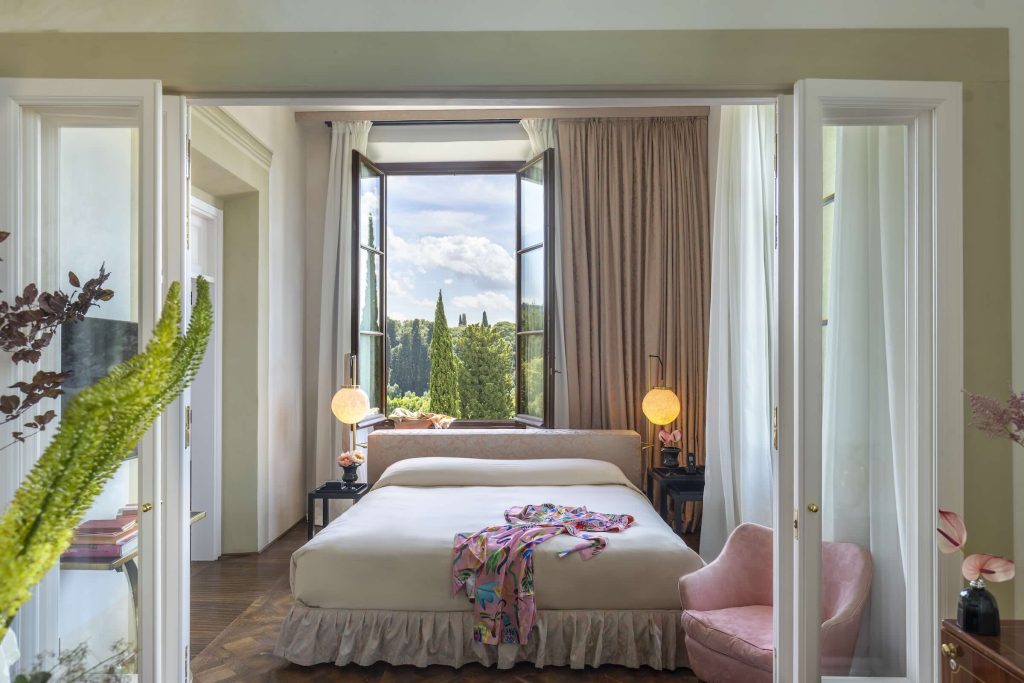
There are 39 keys, in all, with all guest quarters featuring their own whimsical flourishes. (Ours has an entire wall which appears to be shimmering drapes but is actually a cunningly applied modern fresco—vastly cooler than it sounds in prose.)
The Dalì Suite nods at the surrealist Spanish master’s aesthetic (he stayed here once) but not too overtly. The Grand Greenhouse Suite is a two-bedroom retreat, with floor-to-ceiling glass walls, in which guests are immersed in Il Salviatino’s gardens. But for something to literally write home about, consider the Presidential Suite, a grand statement space whose wow factor is bolstered by an impressive marble fireplace and original oil canvases by Dutch Golden Age landscape painter Gabriel van der Leeuw.
Did they greet you by name at check-in?
Yes. Several smartly attired staff members approached their introductions to my family as if we were distant relations, just arrived from New Jersey having made a “ritorno alle radici” pilgrimage to the motherland.
Was a welcome drink ready and waiting when you arrived?
Yes, a local fizz whose bouquet of green apple, wisteria, and herb complimented the glorious botanical surrounds outside. Kicking off with a decent drop set the tone for what was to come, wine-wise. Check out their house expressions of Brunello di Montalcino and Bolgheri—the latter a young but prestigious appellation located in the Maremma on the Tuscan coast. As one staffer put it to me: “About 80 to 85 percent of the wine we serve is from the Tuscan region—in my opinion, 70 of the best wineries in the world are within a 50-kilometre radius of where we are talking.”
Private butler for every room?
That’d be quite an ask, off-season, so a bonus point for how unobtrusively attentive all staff—including a bountifully informative concierge—were throughout our stay.
Is the sheet thread count higher than 300?
Yes. Cotton satin, to be exact, in an ultra-light pink hue that has been specially created to “harmonise perfectly with the natural light filtering through our windows,” as Vitali puts it. Premium Italian brand Rivolta Carmignani made the bed linen, whilst small artisanal Italian brand Dorelan was selected to provide mattresses.
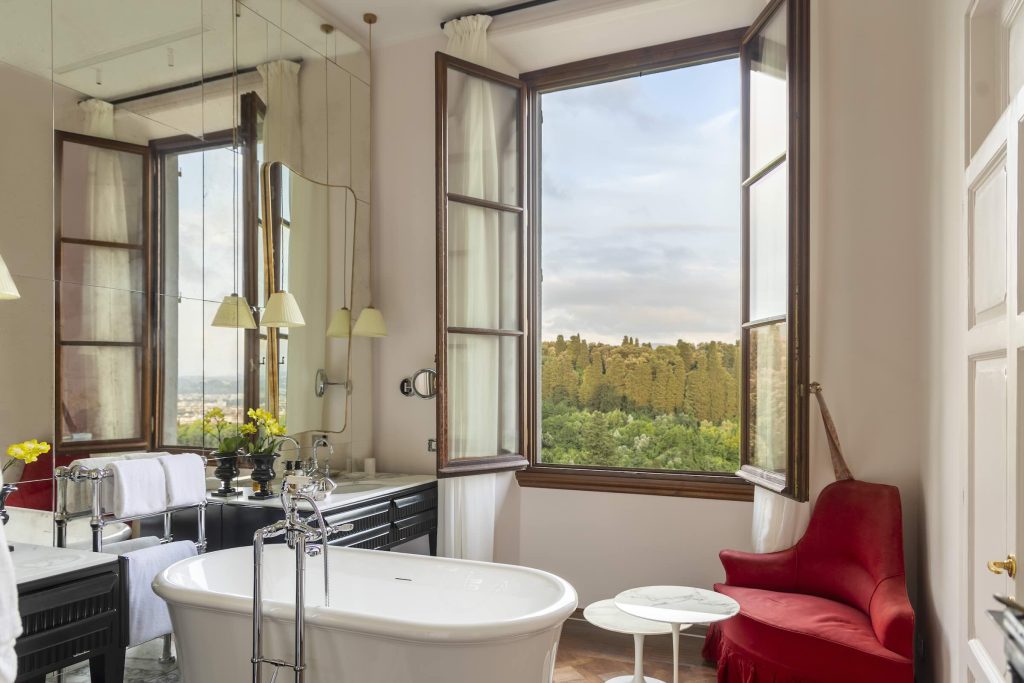
Is there a heated floor in the bathroom? What about a bidet?
When it comes to the latter, yes—prompting a mirth-filled explanatory conversation with the younger members of my family. As for the former, when it comes to the marble used throughout Il Salviatino, Vitali and her team did some serious homework before selecting, from local provider Henraux, two different marbles.
Versilys—a rare Tuscan stone, light grey in tone, with ochre, gold, and white veining—was chosen for its aesthetical suitability to the spaces. Altissimo, a classic of Italian architecture ever since Michelangelo discovered it in Monte Altissimo in 1517, was chosen for its thematic relevance to the area. Call me a soft touch, but when this much thought has gone into the bathroom floor, docking a point for their not heating it from underneath—in a city where temperatures rarely dip below seven degrees Celsius—would be a tad harsh.
Are the toiletries full-sized?
Indeed, in keeping with today’s tenets of ecological priorities. Diptyque, known for its nature-inspired aromas and an abundant celebrity client list it refuses to elaborate on, is the provider.
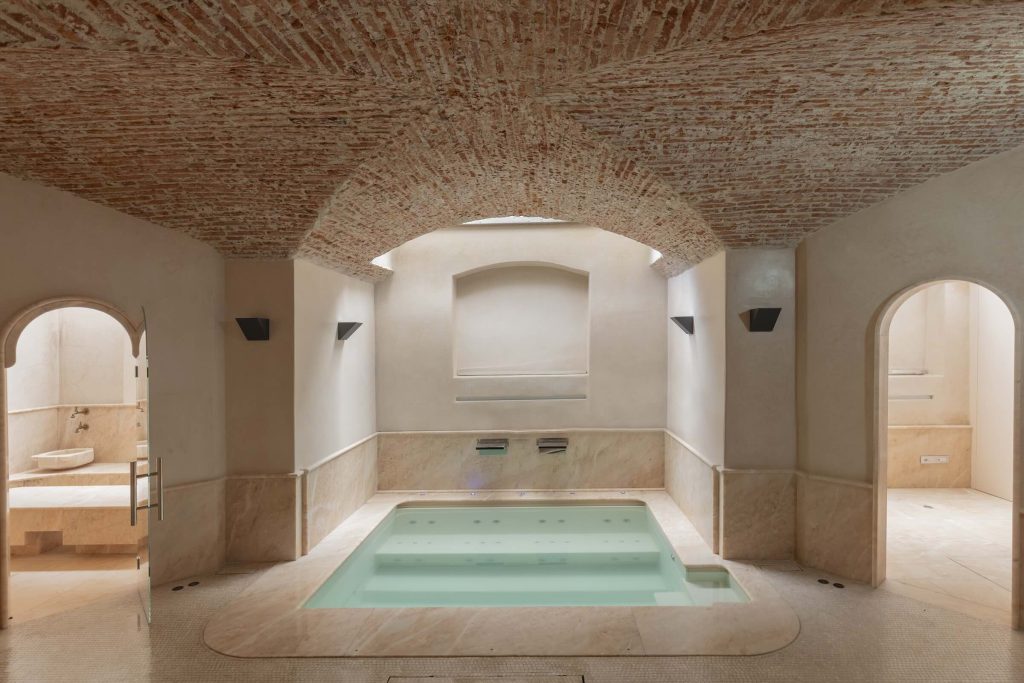
Is there a private pool for the room’s exclusive use? How are the spa and gym?
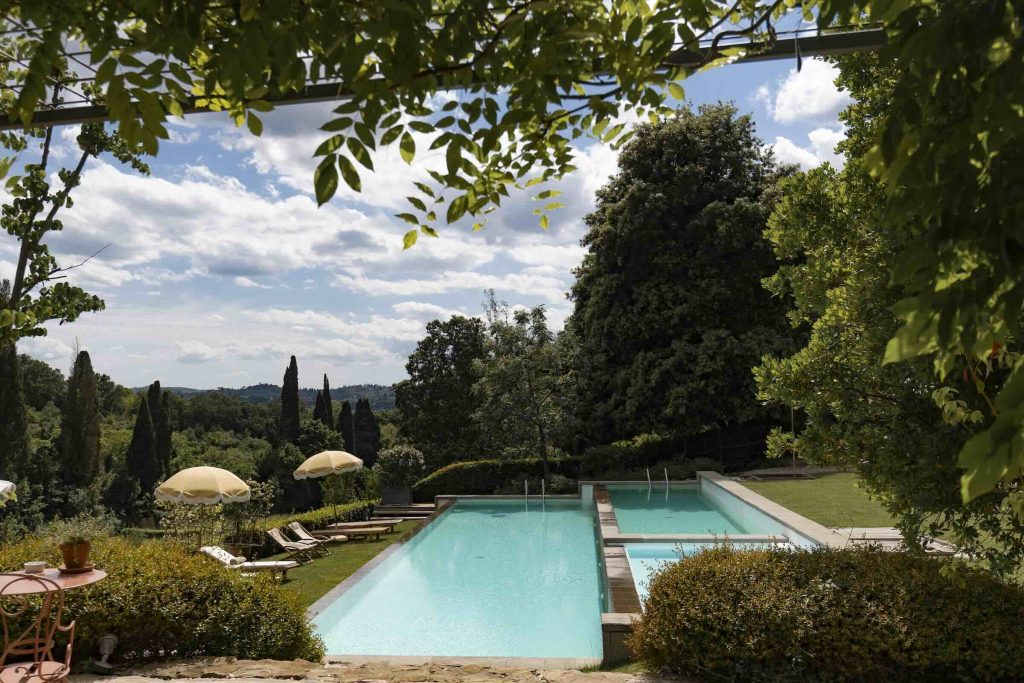
During our visit, yes. Not a single other soul was seen in the vicinity of the split-level, cabana-flanked outdoor infinity pool, found via a short walk down lichen-pocked steps through those enchanting gardens. But—as mentioned above—the big news from this property is the Aquae Vitali Spa, which opened in the summer. A seductive, subterranean space with a Greco-Roman feel to it, set within the original villa’s greenhouse and accessed by a pleasant stroll further down that wisteria-filled gradient in the direction of Florence, it can be booked out for an hour of couple or family time.
It contains a traditional sauna plus hammam, steam room, heated plunge pool, ice bath, and Vichy shower. Aromatherapeutic relaxation and signature massages entail products by local perfumiers and cosmetologists, whilst restorative facials feature award-winning skincare by Professor Augustinus Bader, a German biomedical scientist and physician known for his work in stem cell biology and regenerative medicine.
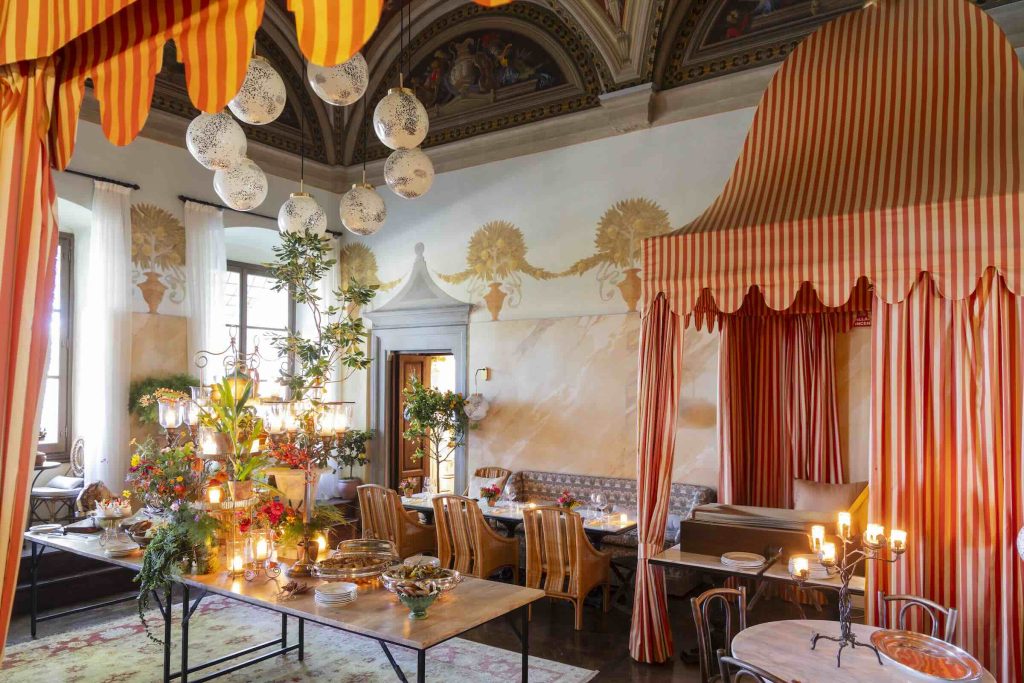
Is the restaurant worth its salt?
Emphatically so. Usually, Da Giacomo al Salviatino—the Florence outpost of a much-lauded Milan eatery—is served in areas of the hotel including the expansive terrace, with its soul-stirring vista, and the hotel’s cosy library between April and October. From 2026 though—bolstering Il Salviatino’s creds as a winter retreat, which is when this writer advises visitors to visit Florence—it will open all year round. Expect a generous, folksy take on Italy’s fresh seafood, enhanced by seasonal ingredients sourced from Il Terzo Paradiso, the property’s botanical permaculture garden. Turbot fillet with celeriac and onions in a zesty sauce is especially recommended. The breakfast experience, too—think breezeblock-size helpings of buttery scrambled eggs with delectably cured bacon, and equally delectable aromas thanks to the patisserie and bakery items all fresh-baked in-house—is worth a bonus point.
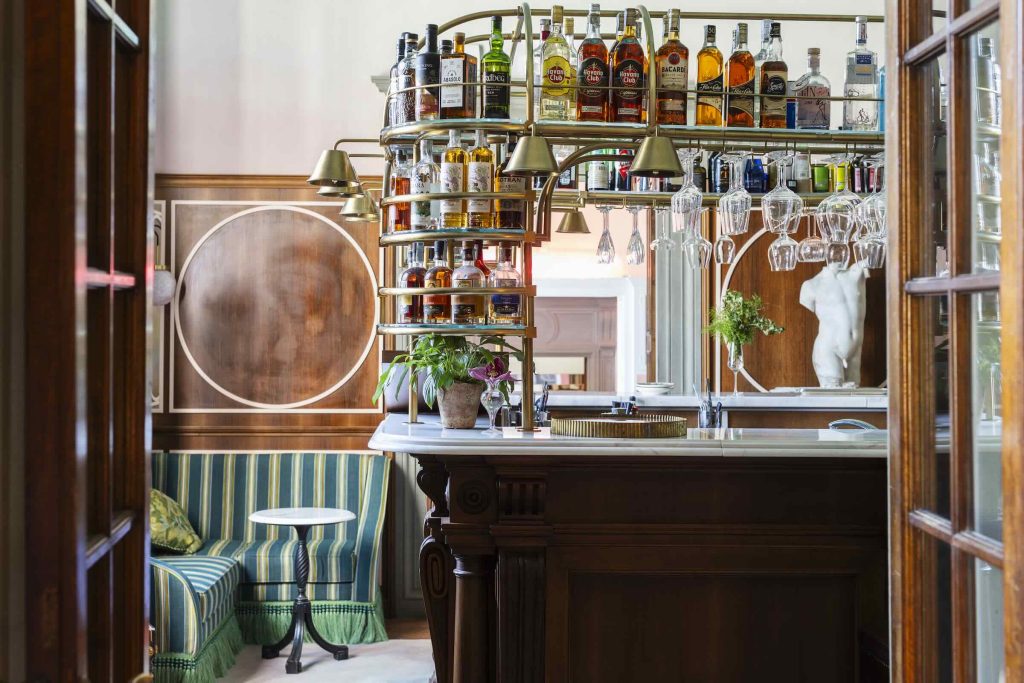
Do you want to spend Friday night in the lobby bar?
Yes, preferably running up a vast bill while chatting to a knowledgeable bar staff member about Tuscany’s prolific craft-based approach to booze. Try the Bibi Graetz Bollamatta Rosato—an Italian sparkling red—before moving onto a local spirit repertoire, the highlights of which include Florentis (Tuscan malt whisky, aged in ex-red wine casks, with a mix of wheat, rye, and barley) and vodka by Chianti-based brand Winestillery.
Would you buy the hotel if you could?
Yes—but only in the realms of fantasy. It would take a soulless speculator to remove Il Salviatino from the hands of such a doting and adoring owner as its present one. The hotel is so much an expression of Vitali’s character, passion, and perspicacity that you’d end up either emulating her efforts in vain or being responsible for a regrettable shift in its character. You might retain its intrinsic financial worth (nine figures in Euros, by my back-of-a-beermat estimation), but its emotional value would likely wither.
Score: 9.5
What Our Score Means:
1–3: Fire your travel agent if they suggest you stay here.
4–6: Solid if you’re in a pinch—but only if you’re in a pinch.
7–8: Very good. We’d stay here again and recommend it without qualms.
9–10: Forget booking a week. When can we move in permanently?
All images courtesy of Dario Garofalo and Il Salviatino.